What Truly Matters: Foundations of Character – Integrity, Empathy, Grit.
In our busy lives, we often think a lot about marks, money, jobs, or how many friends we have. These things are important, but they are not the most important. What truly matters is our character – the kind of person we are inside. A strong character helps us live a good and meaningful life. The three key parts of a strong character are integrity, empathy, and grit.
Integrity – Being Honest and True
Integrity means doing what is right, even when no one is watching. A person with integrity is honest, fair, and trustworthy. They do not lie, cheat, or take shortcuts. They stand by their values and keep their promises.
For example, if you see someone drop money, you return it, even if no one else saw it happen. In school, if you make a mistake, you admit it. You don’t blame others or hide the truth. People with integrity are respected and trusted by everyone. They feel proud because they know they are doing the right thing.
Empathy – Understanding and Caring for Others
Empathy means being able to understand how others feel. It is about listening, caring, and being kind. When you are empathetic, you try to see the world from another person’s point of view.
If your friend is sad, you comfort them. If someone is left out in a group, you include them. If someone is hurt, you help them. Small acts of kindness can make a big difference. Empathy helps us build strong friendships and live in peace with others. It teaches us that everyone has feelings and deserves love and respect.
Grit – Never Giving Up
Grit means having the courage and strength to keep going, even when things are hard. Life is full of problems, but grit helps us face them. It helps us work hard, stay focused, and not give up easily.
For example, if you are struggling in a subject at school, grit helps you keep trying, asking for help, and practicing more. If you fall, grit helps you stand up again. Many successful people did not win the first time. They failed many times, but they did not quit. That is grit – the power to keep trying.
Why These Qualities Matter:
Integrity, empathy, and grit are the roots of a good character. They help us become better students, friends, and citizens. These qualities do not depend on our looks, marks, or money. They are inside us, and we can grow them every day.
In the end, people may forget how smart or rich we were, but they will always remember how we treated others and how we faced life’s challenges.
What truly matters is not how much we have, but who we are. A good character is built on honesty (integrity), kindness (empathy), and strength (grit). These are the real treasures in life. If we grow these qualities, we will live with pride, joy, and peace.
(How a Clean and Tidy Environment Helps Us Think Better)
Have you ever noticed how good you feel when your room is clean and tidy? A clean space is not just good to look at – it also helps your mind feel calm and fresh. Our environment, especially the place where we live or work, can really affect how we feel, think, and act.
When things are messy, our brain gets distracted. We may feel stressed, tired, or even unhappy. But when things are clean and in order, we feel peaceful and more in control. It’s like our brain can breathe better!
Clean Space = Happy Thoughts
When your surroundings are neat, your mind becomes more relaxed. You don’t waste time searching for lost things. You don’t feel crowded by the mess around you. Instead, you feel happy and free.
This happiness can also help you think better. Many people say they get more ideas and feel more creative in a clean space. Whether you’re doing homework, writing a story, or drawing a picture, a clean area helps your brain focus.
Tidy Room, Tidy Mind
A tidy space is not just about beauty. It teaches us discipline and good habits. When we clean up after ourselves, we learn to be responsible. Keeping our books, clothes, and toys in the right place helps us build better routines. These routines make us more organized in life too.
Also, when we clean together at home or school, it brings people closer. Cleaning as a team can be fun and helps build good relationships.
Clean Places Keep Us Healthy
Dust and dirt can make us sick. A dirty room can lead to cough, cold, or allergies. But when we sweep the floor, wipe the tables, and throw waste in dustbins, we stop germs from growing. A clean place is a healthy place!
And when our body is healthy, our mind works better. We can think clearly, remember things easily, and feel more active during the day.
Respecting Our Environment
Our home, school, and even our planet deserve to be treated with love and care. When we keep our spaces clean, we show respect for nature and others around us. We also set a good example for younger children and visitors.
Small acts like putting things back in place, not throwing litter, and watering plants can make a big difference.
A clean and tidy environment is like a mirror—it reflects the way we think and feel. If we take care of our space, our space takes care of us.
So, let’s make it a habit to clean a little every day. Let’s keep our desks neat, our shelves arranged, and our surroundings bright and fresh.
Remember: A clean space is not just a place—it’s a feeling!
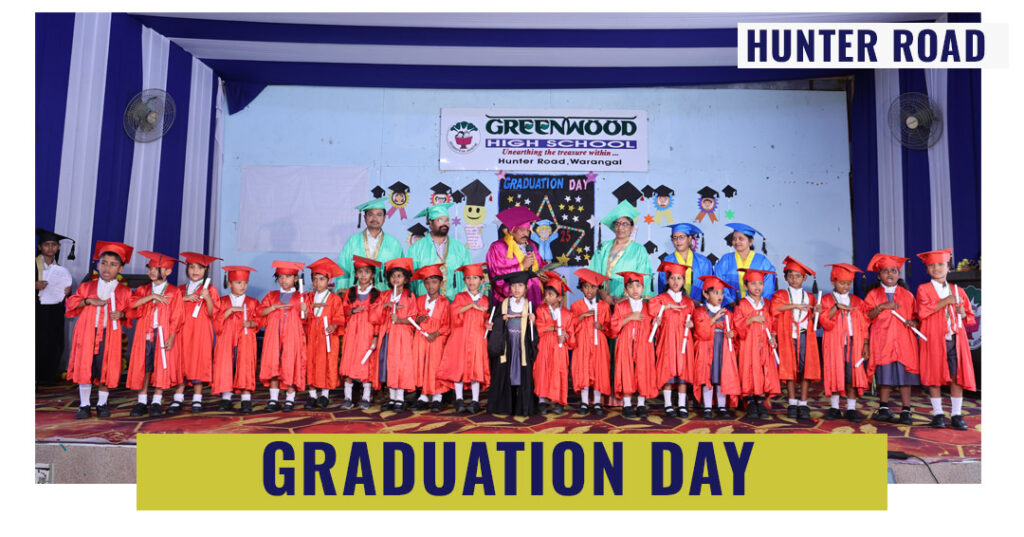
The much-anticipated Graduation Day for the pre-primary and primary school students was held on 7th of April, 2025 on a bright and joyful morning at Greenwood High School, Hunter Road Branch. The event, which marked the culmination of a year of learning, growth, and friendship, was a grand celebration filled with splendid dance performances, proud moments of honour ceremony in graduation attire , and inspiring speeches.
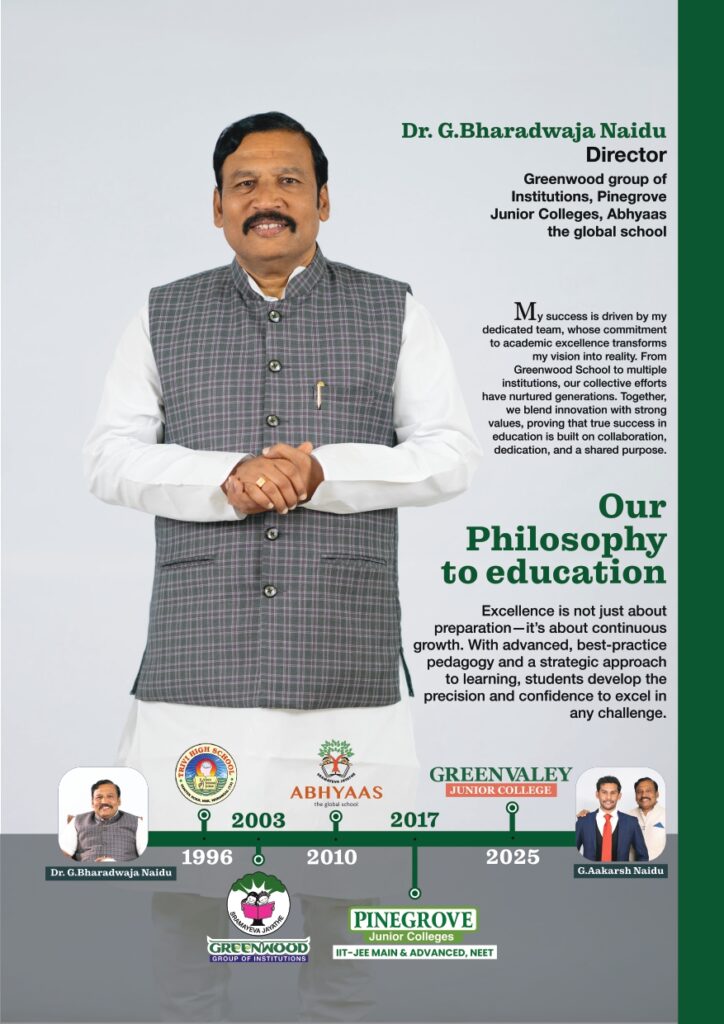
The occasion was graced by the Director of the school, Dr.G.BharadwajaNaidu ,General Manager A.Prabhu Kumar , Academic Dean Dr.Ch.Ravinder, the school’s PrincipalManjula Devi, and the vice Principal K. Srikanthwho not only delivered heartfelt speeches but also motivated students and parents with their noteworthy words
The Director praised the students for their hard work and dedication, acknowledging the role of parents and teachers in creating a supportive environment for the children to thrive. He also emphasized the school’s commitment to providing a well-rounded education that prepares students for the challenges of tomorrow.Heexclaimed,”The knowledge and skills you’ve gained here will be the foundation for everything you achieve in the future!”
The young graduates stood proudly , ready to take on the next chapter of their educational journey, they recited their Graduation Oath with enthusiasm and commitment administered by the Director .
The students, from pre-primary to primary, showcased their creativity and teamwork. Each class presented a unique dance and expressing what they had learned throughout the year.
The Pre-Primary and Primary Graduation Day was a proud moment for all, as it reflected not only the achievements of the students but also the commitment of their teachers and the love and encouragement of their families. As these children step into the next phase of their academic journey, there is no doubt that their bright futures are full of promise, creativity, and success.
Greenwood High School hosted the much-anticipated G-Fair for students of Classes 6 to 9 on March 29, 2025. The event was honored by the presence of Director Sri. Dr. G Bharadwaja Naidu sir, Principal mrs. Manjula Ma’am, Dean of Academics CH. Ravinder, Vice principal Srikanth sir and ACOs Harshavardhan sir and Sailaja maam, who encouraged students with their inspiring words.
The fair showcased innovative ideas across various subjects, presented through models, charts, and interactive exhibits. The students’ creativity and dedication were on full display, making the event an enriching learning experience. Adding to the excitement, food stalls were also organized, attracting enthusiastic crowds and creating a lively atmosphere. The event, held from 10:00 AM to 1:00 PM, was filled with energy and enthusiasm, as students participated whole heartedly. As this chance comes Once in a blue moon students grabbed this opportunity and showcased their amazing skills and abilities to grasp, learn, understand and present different ideas and concepts.
Simultaneously, the younger students from classes KG to 5 celebrated “Wisdom Day,” where they showcased their skills and talents, captivating the hearts of everyone present. Their performances reflected immense confidence, creativity, and enthusiasm.
Dear parents & students, if you want more photos of G-fair click on button below
To make the event even more special, parents and family members were invited to witness the students’ unique talents and encourage them. Their presence added to the excitement and motivation of the young learners.
The dedicated teachers at Greenwood High School played a crucial role in organizing and executing the event, ensuring its grand success. Their efforts were deeply appreciated, as the feedback from parents was overwhelmingly positive.
The event concluded on a heartwarming note, leaving students, teachers, and parents with a sense of pride and accomplishment. It was truly a day of learning, creativity, and celebration at Greenwood High School.
SPEAK IN SUCH A WAY THAT OTHERS LOVE TO LISTEN TO YOU.
LISTEN IN SUCH A WAY THAT OTHERS LOVE TO SPEAK TO YOU.
Emotional intelligence means understanding our own feelings and the feelings of others. It helps us to stay calm when we are angry, to cheer up when we are sad, and to support our friends when they need us. Just like learning to read or do math, it is important for children to learn how to manage their emotions too.
Sometimes, children feel big emotions like anger, sadness, fear or even too much excitement. If they do not know how to handle these emotions, it can lead to problems like shouting at others, crying a lot, or feeling lonely. But if children are taught to understand and control their emotions, they grow up to be kind, confident and happy people.
Emotional intelligence is very important in our daily life. It helps us to make good decisions, solve problems peacefully, and build strong relationships. When we are able to express our feelings in a good way, others understand us better. It also helps us to become good listeners and better friends.
The Role of Family
Family is the first place where a child learns about emotions. When parents talk to their children about how they feel, the children learn to name their feelings. If a child is angry or upset, parents can help by listening and comforting them. They can teach children not to hide their feelings but to express them in a healthy way. For example, instead of shouting, they can use words to explain what is wrong. Parents who show love and care make their children feel safe, and this helps them grow emotionally strong.
The Role of Teachers and Schools
Schools are not only for learning subjects like math and science. They are also places where children learn how to behave, work together, and solve problems. Teachers play a big role in helping children manage their emotions. When a child is upset in class, a kind teacher can calm them down and talk to them. Schools can also hold special classes or activities where children learn about emotions, kindness, respect and teamwork. Morning assemblies, story sessions, group projects and games all help children become more emotionally intelligent.
The Role of Friends
Friends are also very important. Children spend a lot of time with their friends, and during this time, they learn to share, forgive, and care for each other. Sometimes there are fights between friends, but these moments teach important lessons about saying sorry, understanding others and being patient. Good friends support each other during tough times, and this helps children feel loved and understood.
Let’s consider emotional intelligence is a life skill that every child needs. It helps children to grow into kind, confident and successful adults. Families, schools, teachers and friends all play a big part in teaching and supporting children in handling their emotions. When everyone works together, children feel happier, safer, and ready to face the world.
Greenwood High School, Mancherial, joyously celebrated Traditional Day with great fervor and cultural spirit under the guidance of our esteemed Principal Mr. R. Chandramohan and Vice Principal Mr. G. Tirupathi. The entire campus was filled with vibrant colors and traditional attire, creating an atmosphere of cultural unity and pride.
Students and staff came dressed in traditional wear representing various regions of India, showcasing the beauty and diversity of our country. The celebrations began with a formal gathering, where dignitaries were welcomed with traditional tilak and garlands. The event commenced with the lighting of the lamp followed by a soulful invocation song.
A variety of cultural performances were held, including classical dances, folk songs, skits, and a ramp walk highlighting the rich cultural heritage of different Indian states. Each performance was a tribute to the diverse traditions of our country and received loud applause from the audience.
Teachers also participated enthusiastically, making the event even more memorable. Speeches highlighting the importance of preserving and respecting our cultural values were delivered by students and teachers alike.
The event concluded with a heartfelt message from the Principal, encouraging students to take pride in their traditions while embracing modern values. Traditional Day at Greenwood High School was a grand success, promoting unity in diversity and leaving behind cherished memories for all.
Our school Abhyaas, the global school organized a free eye testing camp for the children and staff on 12 March 2025. The camp was conducted by the team of experienced ophthalmologist from Max vision.
Ophthalmologist doctor advice, some guidelines to students and staff.
Get regular eye checkup
Avoid staring at the screen for too long
Avoid using Mobiles for long time
Avoid rubbing your eyes frequently
Eat green leafy vegetables, thrice a week
Give more awareness on myopia, which is also known as nearsightedness, is a common vision condition where close objects are seen clearly, but distant object appearing blurred.
Symptoms of myopia
Difficulty, seeing distant objects
Squinting or staining to see far away objects
Headache or eye strain for prolonged focusing
Difficulty in driving or watching TV.
Before the eye testing, there was an interaction between doctors and students, students asked their doubts and doctors clarified them. It was very interesting conversation between doctors and students.
**** High school girl students came up with doubt as can they use eyeliner or Kajal.
Whole school students’ eyes were tested, instructions given during eye testing were follow instructions carefully, look directly at the target, honestly.
Doctors followed the testing on the basis of
Visual acuity test: students were asked to read the letters from an eye chart to assess their visual acuity.
Refraction test: students were asked to look through a phoropter, which is a device that contains different lenses. This test helps to determine students perceptions.
Cover test: students asked to cover one eye and then the other while looking at the target. This test helps detect any eye alignment problems.
Abhyaas believe that healthy vision is essential for academic and personal growth. Abuse will continue to organize such camps to ensure that our students have access to the quality eye care.
CAMP WAS A HUGE SUCCESS
ABHYAAS thanks Max vision ophthalmologist for their support and expertise in making this camp a success.
Organizing and executing a successful event is no small feat. It requires a blend of several key skills, all of which play a significant role in ensuring everything runs smoothly and achieves its purpose. For students, learning these skills can be invaluable, not only for school events but also as life lessons that extend far beyond the classroom.
Planning and Organization: Planning forms the backbone of any successful event. From setting objectives to creating timelines and allocating resources, organization ensures all aspects are accounted for. A well-structured plan minimizes confusion and helps everyone involved stay on track.
Teamwork and Collaboration: No event can succeed without effective teamwork. Coordinating efforts, communicating clearly, and working harmoniously with others are vital. Collaborative skills help in resolving conflicts and ensuring everyone’s contributions align with the event’s goals.
Leadership: Good leadership is essential for guiding the team, making decisions, and taking responsibility. Leaders inspire others to put in their best efforts and provide direction when challenges arise.
Time Management: Events are often bound by tight schedules, making time management critical. Prioritizing tasks and adhering to deadlines ensures that all preparations are completed without unnecessary stress or last-minute rushes.
Creativity and Innovation: Creativity adds uniqueness to an event, making it memorable and engaging. Innovative problem-solving helps overcome obstacles and adapt to unforeseen circumstances.
Schools play a crucial role in equipping students with these skills. Here are some effective ways to do so:
Encouraging Participation in Events: Schools can involve students in organizing cultural programs, sports meets, debates, and other events. Hands-on experience teaches them the nuances of event management.
Assigning Leadership Roles: By appointing students as team leaders, schools can help them develop decision-making and responsibility-handling abilities.
Communication Skills: Clear communication, both verbal and written, is essential for conveying ideas, instructions, and updates. Effective communication ensures that everyone understands their roles and responsibilities.
Adaptability and Problem-Solving: Unexpected challenges are inevitable. Being adaptable and thinking on your feet helps to address issues promptly and keep the event on track.
Each of these skills contributes to the overall success of an event. Planning ensures a clear roadmap, while teamwork and leadership bring people together to execute the plan. Creativity makes the event stand out, and adaptability ensures that obstacles don’t derail progress. These skills not only help in pulling off a seamless event but also foster personal growth, building confidence, resilience, and a sense of achievement.
Schools play a crucial role in equipping students with these skills. Here are some effective ways to do so:
Encouraging Participation in Events: Schools can involve students in organizing cultural programs, sports meets, debates, and other events. Hands-on experience teaches them the nuances of event management.
Assigning Leadership Roles: By appointing students as team leaders, schools can help them develop decision-making and responsibility-handling abilities.
Conducting Workshops and Seminars: Workshops on planning, communication, and problem-solving can provide students with practical insights into these skills.
1Promoting Group Projects: Group assignments encourage teamwork and collaboration, preparing students to work effectively with others.
Providing Platforms for Creativity: Schools can foster creativity by allowing students to take charge of themes, designs, and ideas for events.
Teaching Time Management: Assigning deadlines for tasks and guiding students on prioritization can instill good time management habits.
Role-Playing and Simulations: Mock events and simulations can give students a chance to practice event management skills in a controlled environment.
By incorporating these strategies, schools can not only prepare students to organize successful events but also help them develop competencies that will benefit them in their personal and professional lives. These skills are building blocks for future success, instilling confidence, teamwork, and a problem-solving mindset in every student.
“Sowing the Seeds of Gratitude for the Farmer and towards the nature”.
In a unique initiative, our school organized a “Children’s Farming Day” for grade V (Jameswatt) to educate and sensitize our young minds to the importance of farming and the hard work of our farmers. The event aimed to bridge the gap between the urban and rural worlds, fostering empathy and appreciation for the people who toil to bring food to our tables.
The day began with an interactive session, where children learned about the different types of crops, farming techniques, and the challenges faced by farmers. They were fascinated by the various tools and equipment used in farming, which sparked their curiosity and creativity.
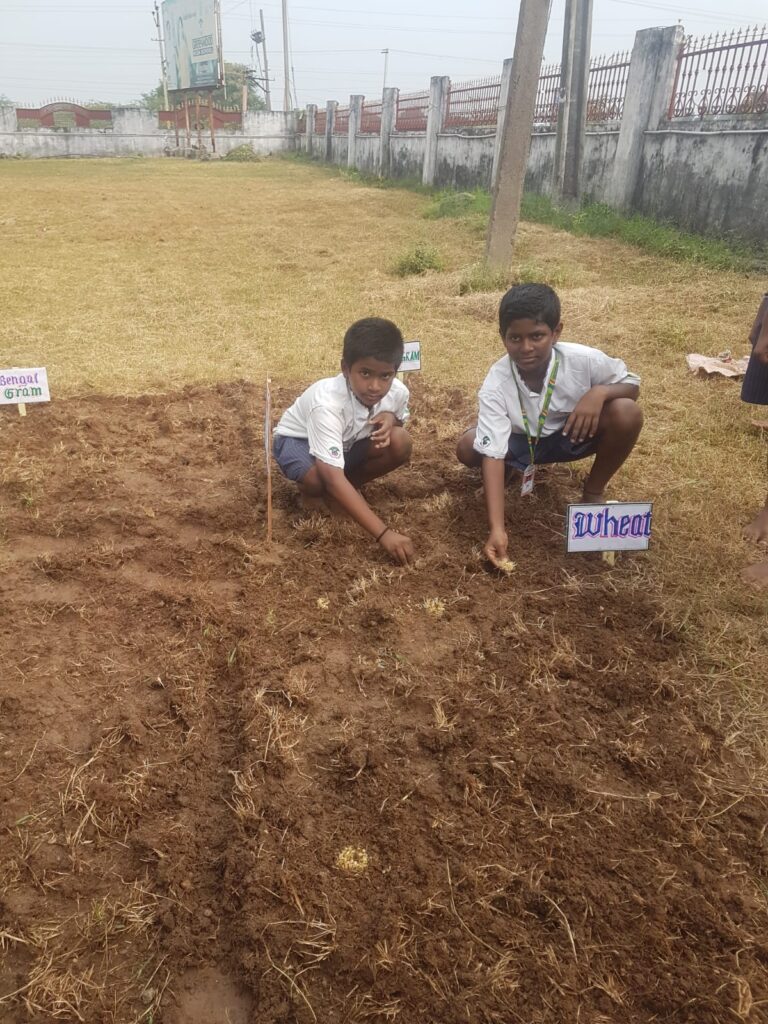
The children then got their hands dirty, participating in a series of fun-filled farming activities. They planted saplings, watered crops, and even tried their hand at harvesting. The experience not only taught them about the importance of sustainable farming practices but also instilled in them a sense of responsibility and connection with nature.
To give the children a deeper understanding of the farmers’ lives, we invited a local farmer and also the gardeners of our school to share their experiences and stories. The children listened with rapt attention, asking thoughtful questions and showing genuine interest in the farmer’s work.
The event culminated in a heartfelt tribute to our farmers, with the children by expressing their gratitude. It was a poignant moment, filled with emotion and sincerity.
As the children left the farm, their faces beamed with excitement and newfound appreciation for the farmers who work tirelessly to feed our nation. The experience had not only educated them but also inspired them to become more empathetic and responsible citizens.
CONCLUSION: Children sowed the crops like Green gram, Bengal gram, horse gram and wheat and as the days passed and seedlings germinate to plants, the joy in their faces also blossomed with lot of curiousness and satisfaction. Children also started singing songs while sowing and when they see the crop grown, they also started taking off the evil eye from the crop, which made us wonder how the children are holding the responsibility of the crop.
In the words of one of our young participants, “I never knew farming was so much fun! I want to be a farmer when I grow up and help feed people.” Moments like these remind us that by instilling values of empathy and appreciation in our children, we can create a brighter, more compassionate future for all.
The event was a testament to the school’s commitment to promote STEM education and a fostering love and gratitude for nature among its students.
National science Day is celebrated in India on February 28 every year to commemorate the discovery of the Raman effect by Indian physicist Sri CV Raman on February 28, 1928.
In 1928, Shri CV Raman discovered the Raman effect, which is the scattering of light by molecules. This discovery led to a deeper understanding of the behaviour of lights and its interaction with matter. Raman‘s discovery was recognised with the noble prize in physics in 1930.
National Science Day celebrated to recognise the contribution of Indian scientists, promote scientific awareness, encouraging young minds, foster culture of innovation.
ABHYAAS the global School celebrated national science Day as“EXPLORING THE WONDERS OF SCIENCE.”
The science fair was resounding success, with over 200 students from grade 1 to 8 participated in the event. The the fair was held on February 28, 2025 in the school campus, was conducted by students, teachers, parents, and the guest from the local community.
Objective to conduct science fair:
To encourage students to develop an interest in science and technology.
To promote critical thinking, creativity, and problems, solving skills.
To frost the sense of curiosity, enquiry, and discovery.
To enable students to design, conduct, and present their own scientific investigation.
To develop students, scientific literacy, and understanding of scientific concept.
To increase the student to think creatively and develop innovative solution to the real world problem.
To provide a platform for students to show their scientific talents and achievements.
To promote collaboration, teamwork, and communication among students.
Highlights of the science fair: over 100 innovative projects were showed covering the wide Range of topic from robotic to artificial intelligence to the environment, science, and biotechnology.
Students demonstrated exceptional creativity and critical thinking and problems solving skills in their projects.
The fair provided a platform for students to interact with each other, share ideas, and learn from one another.
Outstanding project
1. Project title: seasons
*Grade: 1 section A
* reason for being outstanding: Tiny tots explained the colourful model very impressive fluent English.
2. Project title: landforms
*Grade: 2 section A
* reason for being outstanding: students prepared 3-D models, very impressive, presentation was excellent.
3. Project title: molecules
Grade: 5 section B
Reason for being outstanding: presentation was excellent with the fluent English and proper information.
4. project title: Chandrayaan
Grade: 6
Reason for being outstanding: student exhibited excellent knowledge of space and satellite with the working model of satellite Chandrayaan.
5. project title: dialysis
Grade : 8
Reason for being outstanding: students prepare a working model of blood purification, and when the dialysis is needed. Most of the parents were found near this model to know more about the kidney.( also given awareness about healthy liver. With the proper model)
6. Project title: Junior Doctors team
Grade : 8
Reason for being outstanding: students were excellent in their performance as they performed as DOCTORS, checked BlOOD PRESSURE, HEART BEATS, BLOOD GROUP.
All the parents crowded near doctors , students were like professional doctors.
**Cute display :was a fruit basket with all type of fruits, be student from grade 1 explaining the fruits, colour, taste, and vitamins in it. No parent or the visitor stopped, pulling the cheek of this tiny tot.
**Tiny tots, primary students were with their models like zoo Jungle seasons they were found well prepared by their presentation.
Mesmerising display: *by grade 5, talking robot.
* Abhyas Robo Car.
* Room cooler
* vacuum cleaner
* waste water treatment
* harvesting of rainwater
*Types of soil
Biology department: *exhibited the live animals love birds, fighter fish tank, aquarium.
grade 6 explain human skeleton .
Chemistry department* came up with some chemical magic shows.
From chairman’s desk:
congratulations to all the students who made science fair a memorable event!! your projects, displace, and presentations were informative, engaging and inspiring. We appreciate the efforts of everyone involved in making this event a success.
Honourable Chairman Sir declared appreciation token will be given to all the participants, and three best projects will get surprising prizes.
From the principal’s desk: announced science fair was a huge success, and we are proud of all the participants for their hard work and dedication. We would like to thank our judges, teachers, and parents for their support and encouragement. Special Thanks to Science Department.
Eureka!!!!!! Eureka!!!!!! Tiny tots that’s exploring the wonders of science!!!!!!!!
FAREWELL PARTIES MARK THE END OF ONE CHAPTER AND THE BEGINNING OF ANOTHER.
A farewell party is a way to show appreciation and gratitude to the departing students and provide an opportunity to look back on past experiences while also looking forward to new challenges .
Grade 9th took the lead in organising farewell ceremony for their seniors.
Invitation: Join us as we bid farewell to our beloved Grade 10 students.
Juniors prepared an eye-catching, invitation booklet.
1st page shows bold and clear headlines that reads “FAREWELL PARTY”,including date,time,location .
2nd page: School management names , started with our honourable chairman sir Dr. G. Bharadwaj Naidu and space for signature followed by next hierarchy .
3rd page : Names of teachers and non teaching staff and space for signature .
4th page : for Grade 10 student’s names and space for their signature,
5th page :Tree stem was painted , each student od grade 10th gave their thumb impression and signature as tree leaves, this idea was very unique.
Next pages filled with Goodbye slogans, and best wishes to seniors.
Highlight of the invitation: signature against their name as acknowledgment.
Virtual invitation was given to our chairman.
Invitation was fascinating and amazing to each and everyone waiting for the party.
*The Big Day : Abhyaas school indoor Stadium designated party area was decorated with balloons, streamers, colourful posters, and School banner.
A playlist of popular songs was prepared to keep the party atmosphere lively.
Students arrived at the party venue in their finest attire. Grade 9 welcomed everyone with a warm smile.
The program started with prayer song sung by Telugu department, followed by welcome, dance by grade 9 girls.
DIGNITARIES WERE INVITED onto the Dias ninth class girls, welcome them with flower bouquets and the dignitaries address the gathering, sharing words of wisdom, appreciation, and moral values, wishing them bright future.
Next followed by grade ninth and 10 students, dances and speeches, which gave an emotional touch to the party.
Student’s tag to their Teachers:
*Principal : calm, going and intelligent personality.
Vice principal: legend
Coordinator Madam: Queen of kindness.
Class teacher: supportive personality
Telugu teacher: Nightingale
English Teacher: daring and dashing.
Hindi teacher: calm and pleasant.
Biology teacher: polite and friendly.
Chemistry teacher: quiet and systematic.
Highlight in the program was distributing of remembrance token by grade 9, each student handed over the remembrance token to grade 10, as they were appreciating the grade 10 student with their positive adjectives and also played their favourite song when they were on the Dias, some students had their favourite step, handed over the personlised gift.
Highlight tag to students were like Eid ka Chand, laughing Buddha, talkative, pretty, sensitive aggressive, power star, rebel Star, obedient, etc.
FOOD COUNTER:It was 12:30 pm a delicious spread of food, (including veg ,non-veg deserts and fruits )was served by grade 9 students to whole school.
Games: Housie was attraction of the party.
FELICITATING: grade, 10th students felicitation, principal, vice, principal, coordinator, and their subject teachers with the gifts.
CLOSING REMARKS AND GOODBYES: students had their final goodbyes, promise to stay in touch, DANCED ON FULL DJ till their legs stop moving.
Heart touching event was 10th class students along with their teachers, sang a departure song with their heavyheart.
The party host delivers closing remarks, thanking students, teachers, and the guest for the making farewell party success.
Students reported carrying memories of their time at school and the joyous celebration, they shared with their friends and teachers.
Career exploration means learning about different types of jobs and careers. It helps you understand what kind of work you might enjoy and be good at. Every person has different interests, skills, and dreams, and career exploration helps you find the best path for your future.
For example, some people love teaching and helping others, so they may want to become teachers. Others like building things, so they might want to be engineers or mechanics. Career exploration helps you discover your strengths and interests so you can choose a job that suits you.
Exploring careers is important because it helps you prepare for your future. When you learn about different jobs, you can make better choices about your education and training. It also helps you set goals that match your skills and passions.
If you choose a career you enjoy, work will feel more exciting and meaningful. On the other hand, if you pick a career without thinking, you might feel unhappy later. That’s why it’s important to explore your options carefully.
Here are some simple steps to explore careers:
Think About What You Like: Start by thinking about your hobbies, favorite subjects, and activities. What makes you happy? What are you good at? For example, if you love drawing, you might want to explore careers in art or design.
Learn About Jobs: Talk to adults like your parents, teachers, or relatives about their jobs. They can share what they do and how they got there. You can also read about different jobs online or in books.
Try New Activities: Join clubs, attend workshops, or volunteer. These activities can help you discover what you enjoy and build new skills. For example, if you join a science club, you might realize you enjoy experimenting and want to be a scientist.
Ask Questions: Don’t be afraid to ask questions. If you meet someone with an interesting job, ask them what they do, what they like about it, and how they started.
Setting goals helps you stay focused and work toward your dreams. Here’s how to set goals that suit you:
Know Yourself: Understand your strengths and interests. Think about what you enjoy and what you are good at.
Dream Big but Start Small: Think about what you want to achieve in the future. Then, break it into smaller steps. For example, if you want to be a doctor, your small steps could be studying hard in science and math.
Make a Plan: Write down your goals and the steps you need to reach them. For example, if you want to be a writer, your plan could include reading more books and practicing writing every day.
Stay Flexible: Sometimes, your interests or plans may change, and that’s okay. Be open to new opportunities and ideas.
Work Hard: No matter what your goals are, you need to work hard to achieve them. Stay focused and don’t give up, even when things get tough.
Career exploration and goal-setting are important for building a bright future. By learning about different jobs and thinking about your interests, you can choose a career that suits you. Setting clear goals will help you stay on track and achieve your dreams. Start exploring today, and remember, every step you take brings you closer to a successful future!
Place values are the values of each digit in a number based on its position. Starting from the right, each place value gets bigger by 10 times. The place values are:
Ones (1)
Tens (10)
Hundreds (100)
How to Write Numbers in Expanded Form
Let’s take the number 456. To write this number in expanded form, we break it down into its place values:
400 (hundreds)
50 (tens)
6 (ones)
So, the expanded form of 456 is:
400 + 50 + 6
Why is Expanded Form Important?
Writing numbers in expanded form helps us understand the value of each digit and how they contribute to the total number. It’s like breaking down a big puzzle into smaller pieces!
Example
Let’s try another example. The number 279 can be broken down into:
200 (hundreds)
70 (tens)
9 (ones)
So, the expanded form of 279 is:
200 + 70 + 9
Conclusion
In conclusion, expanded form is a powerful tool that helps us understand numbers better. By breaking down numbers into their place values, we can see how each digit contributes to the total number. So, next time you see a big number, try breaking it down into its expanded form!
We are very glad to share our experiences about Rashtrapati Nilayam visits on behalf of national science day celebrations held at bollaram, Hyderabad on 27th February-2025.
Honorable famous institution directors and senior scientists are shared their experiences and motivated about importance of technology in global era.
National Science Day is observed every year on February 28 to commemorate the discovery of the Raman Effect by Sir C.V. Raman, for which he was awarded the Nobel Prize in Physics in 1930. This day serves as a tribute to Indian scientific achievements while inspiring young minds to pursue careers in science, technology, and innovation. The theme for National Science Day focuses on “Advancing Science for a Sustainable Future”, emphasising the role of scientific research in addressing global challenges such as climate change, healthcare, and technology. National Science Day plays a crucial role in promoting scientific awareness among students, educators, and the general public.
Rashtrapati Nilayam in Bolarum is hosting two-day celebrations from February 27 to 28 to commemorate National Science Day. The event features a variety of sessions and competitions aimed at promoting scientific curiosity and engagement among students and the public.
This event was graced by Dr. Chintakagiri Mohan Rao, Former Director (CCMB) and SS Bhatnagar Awardee, and Dr.Sesikeran Boindala, MD, FAMS, Former Director of ICMR – National Institute of Nutrition. The Scientific R&D exhibits and book exhibition was inaugurated by the guests.
Mohan Rao provided an insightful overview of the Raman Effect, shedding light on its significance in the field of spectroscopy. He explained how this phenomenon, discovered by Sir C.V. Raman, occurs when light is scattered by molecules and emphasized its role in explaining natural phenomena such as the blue color of the sky and the sea. He described how the scattering of light by molecules, a result of the Raman Effect, causes shorter wavelengths, like blue, to be scattered more than others, giving the sky and sea their characteristic color. Also Read – GMR gives 2 e-buggies for HC visitors In a thought-provoking speech delivered by Dr. Boindala, he highlighted several health issues, focusing on the science behind everyday practices and their long-term effects. He emphasized the importance of mindful cooking, using biryani as an example to demonstrate how proper preparation can preserve nutritional value and reduce health risks. Dr. Boindala also addressed the rise in early heart strokes among impoverished communities, attributing this to poor maternal nutrition and low birth weight. Additionally, he discussed the higher incidence of large intestine cancer in Asians compared to Africans, linking this disparity to diet and lifestyle factors, including high processed food intake, low fiber consumption, and lack of physical activity. The inauguration of these celebrations included welcome dances by Punya Keerthi and a curated dance on science by CRPF public school students. We are very happy of participating in various events and competitions like poster making( ranjana bai and nithya –viii newton) and quiz competition ( akshay, utthej, deeksha sri,sumayya and rahul from ix newton).it is good experience to learn more things from the various scientific stalls and galleries.
So finally we are very happy about our representation in the great event organized at Rashtrapati Nilayam on Wednesday 27th February.
We thank management for giving us this opportunity .
DEPARTMENT OF SCIENCE:
PARTICIPANTS: Class-VIII: Ranjana bai and nithya, Class-IX: O.akshay, Class-IX: O.akshay, utthej, deeksha sri utthej, deeksha sri & sumayya and rahul
We are very glad to share our experiences about Rashtrapati Nilayam visits on behalf of national science day celebrations held at bollaram, Hyderabad on 27th February-2025.
Honorable famous institution directors and senior scientists are shared their experiences and motivated about importance of technology in global era.
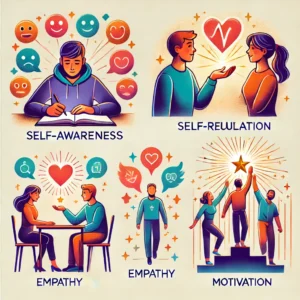
Emotional intelligence (EI) is the ability to understand, manage, and express emotions effectively while also being able to recognize and influence the emotions of others. It involves self-awareness, empathy, social skills, self-regulation, and motivation. Unlike academic intelligence, which is measured through exams and grades, emotional intelligence focuses on the emotional and social aspects of a person’s life, making it an essential skill for success and well-being.
Emotional intelligence plays a crucial role in our daily lives. It helps us communicate effectively, build strong relationships, and make better decisions. People with high emotional intelligence are better at resolving conflicts, coping with stress, and adapting to challenges. In a world that values collaboration and teamwork, EI becomes even more important than technical skills or IQ.
For children and students, emotional intelligence is a key factor in academic success and personal growth. Students with high EI are more likely to manage their emotions during exams, work well with peers, and seek help when needed. Moreover, emotionally intelligent individuals are more likely to develop resilience, which helps them navigate setbacks and failures with confidence.
How to Develop Emotional Intelligence in Ourselves
Practice Self-Awareness: Begin by paying attention to your emotions and understanding what triggers them. Keeping a journal can help you reflect on your feelings and behaviors.
Learn Self-Regulation: Train yourself to pause before reacting impulsively. Deep breathing, mindfulness, and stress management techniques can help you stay calm and composed.
Empathy Matters: Put yourself in others’ shoes to understand their emotions and perspectives. Listening actively and asking open-ended questions can enhance your empathy.
Build Social Skills: Practice effective communication by expressing your thoughts clearly and respectfully. Being open to feedback and resolving conflicts constructively are vital.
Stay Motivated: Set goals and work towards them with enthusiasm. Celebrate small achievements and learn from failures to maintain a positive attitude.
How to Teach Emotional Intelligence to Children
Model Emotional Intelligence: Children often learn by observing adults. Demonstrate emotional awareness, patience, and empathy in your interactions.
Encourage Open Communication: Create a safe space for children to express their emotions without fear of judgment. Teach them to label their feelings and understand their causes.
Introduce Emotional Vocabulary: Help children expand their emotional vocabulary by teaching them words like “happy,” “frustrated,” “anxious,” or “excited.” This enables them to articulate their emotions better.
Teach Problem-Solving Skills: Guide children to solve conflicts and challenges calmly. Encourage them to think about solutions instead of reacting impulsively.
Incorporate EI Activities: Schools can organize role-playing games, group discussions, and storytelling sessions to promote empathy, teamwork, and self-expression among students.
Benefits of Emotional Intelligence in Schools
Incorporating emotional intelligence into school curriculum has numerous benefits. It fosters a positive learning environment, reduces bullying, and improves peer relationships. Students with high EI are more focused and motivated, leading to better academic outcomes. Teachers also benefit from emotionally intelligent classrooms, as students are more cooperative and engaged.
Emotional intelligence is an invaluable skill that enriches every aspect of life, from personal relationships to professional success. By developing EI in ourselves and teaching it to children, we can create a society that values empathy, understanding, and collaboration.
In a world where emotions often drive decisions, emotional intelligence is not just important; it is essential for a happy and fulfilling life.
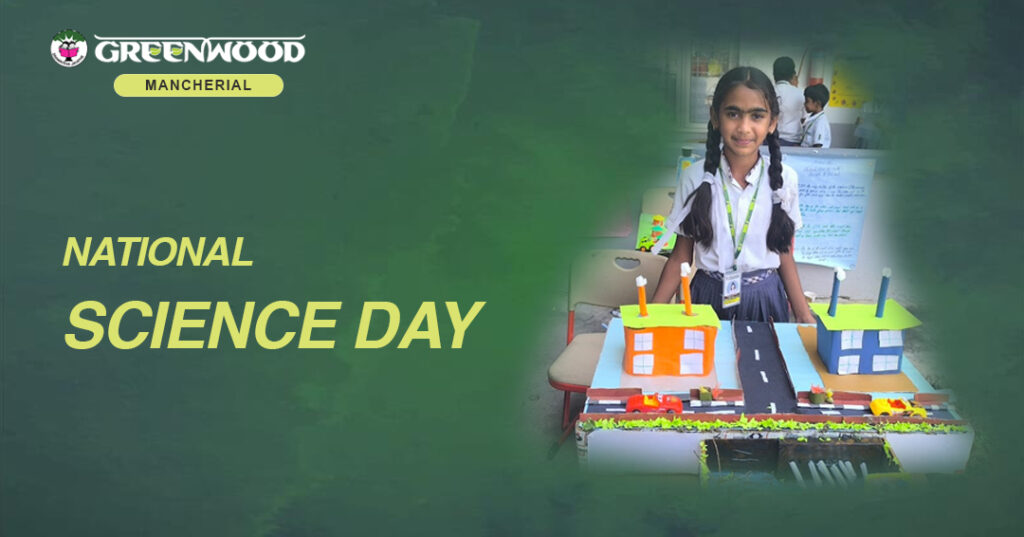
Greenwood High School, Mancherial, celebrated National Science Day with great enthusiasm under the guidance of Principal Mr. R. Chandramohan and *Vice Principal Mr. G. Thirupathi. The event was coordinated by science teachers **Mr. Balakrishnan, Mr. O. Venkatesh, and Mrs. Saba Firdose, who played a key role in preparing students for their project explanations. *Mrs. M. Soujanya, the EVS teacher, also contributed to the success of the event.
The exhibition segment featured a variety of science exhibits brought by students, who explained their projects with confidence and clarity. The judging panel included Mrs. M. Soujanya Latha, Mrs. M. Ramakrishna, and Mrs. Saba Firdous, who evaluated the exhibits and selected the winners across different categories.
Prize Winners
Juniors Category (Grades 1-3):
1st Prize: Haswith (Grade 2)
2nd Prize: Manaswi and Mahendra (Grade 3)
Middle Category (Grades 4-6):
1st Prize: Nehaswi and Thanushri
2nd Prize: Aarick (Grade 4)
Senior Category (Grades 7-8):
1st Prize: Deekshitha (Grade 8)
2nd Prize: Rithwik, Amith, and J. Aniketh
The entire morning session was efficiently anchored by Mr. L. Srinivas, ensuring the smooth flow of the program.
Afternoon Session
The afternoon session commenced with *Principal Mr. R. Chandramohan and Vice Principal Mr. G. Thirupathi garlanding the portrait of Sir C.V. Raman, honoring his invaluable contributions to science. **Mr. Balakrishnan, the science teacher, delivered an inspiring speech, emphasizing the significance of National Science Day. *Hanika from Grade 8 also delivered a speech, sharing her insights on the importance of scientific innovation. The session concluded with the Principal Mr. Chandramohan ‘ s address, where he motivated students to cultivate a scientific mindset and explore the wonders of science.
The National Science Day celebrations at Greenwood High School were a grand success, fostering scientific curiosity and innovation among students.
Greenwood High School, Gopalpur, celebrated National Science Day with great enthusiasm, engaging students in various interactive activities to enhance their scientific understanding. The celebration aimed to make learning more practical and enjoyable by encouraging students to apply their textbook concepts through experiments and demonstrations. Each class participated actively, showcasing their creativity and knowledge.
The primary section focused on simple science experiments, such as water density tests, magnetism, and plant growth observations, helping them understand basic scientific principles in a fun and engaging manner.
Middle school students demonstrated experiments related to their syllabus, including topics like light reflection, acids and bases, and electric circuits. Senior students took a step further by presenting working models on environmental sustainability and space science, highlighting real-world applications of their learning.
Teachers guided students in explaining their textual concepts through hands-on activities, making complex theories easier to grasp. The event not only enhanced students’ curiosity but also encouraged teamwork and innovative thinking. Principal Mrs. Kavita Chawla appreciated the efforts of both students and teachers, emphasizing the importance of scientific temper in daily life. The day concluded with an inspiring talk on India’s scientific achievements and the significance of research in shaping the future.
The celebration of National Science Day at Greenwood High School successfully fostered a spirit of inquiry and creativity among students, making learning an exciting and meaningful experience.
Critical thinking is the ability to think clearly and logically. It means understanding a problem, analyzing it carefully, and finding a good solution based on facts. Critical thinkers do not accept everything they hear as true. Instead, they ask questions, check the evidence, and think deeply before making decisions.
Problem-solving skills are closely connected to critical thinking. These skills help us find answers to challenges we face in life. Problem-solving means identifying the problem, understanding it, and coming up with creative and practical solutions.
In today’s world, critical thinking and problem-solving skills are very important. We are surrounded by a lot of information, but not all of it is correct or useful. Critical thinking helps us decide what is true and what is not.
In school, these skills help students perform better in subjects like math, science, and even literature. In real life, they are essential for making good decisions, solving conflicts, and handling difficult situations. For example, when faced with a tough situation, a critical thinker will not panic. Instead, they will calmly find the best way to solve the issue.
In the workplace, employers value people who can solve problems quickly and think critically. These skills make individuals better at teamwork and leadership.
Schools play a big role in developing critical thinking and problem-solving skills among students. Teachers can encourage students to ask questions and think about the “why” behind things. Instead of just giving answers, they can guide students to find answers on their own.
Group discussions and debates are excellent ways to practice critical thinking. They help students see different points of view and learn to think for themselves. Problem-solving activities, like puzzles, projects, and case studies, also help students improve these skills.
Subjects like math and science naturally involve problem-solving, but schools can also teach these skills through games, stories, and teamwork activities.
Students can take steps to develop their critical thinking and problem-solving skills. First, they should learn to be curious. They should ask questions like, “Why does this happen?” or “What if we try this way?” Curiosity leads to better understanding and deeper thinking.
Reading books, watching educational videos, and exploring different ideas can also help. Students should try to solve problems on their own before asking for help. This helps them build confidence and creativity.
Another way is to work with others. By discussing problems with friends or classmates, students can learn from different viewpoints. Participating in activities like debates, quizzes, or science fairs can also improve these skills.
Lastly, students should not be afraid to make mistakes. Every mistake is a chance to learn and grow.
Critical thinking and problem-solving skills are keys to success in school, work, and life. They help us make better decisions, solve problems, and achieve our goals. Schools and students both have important roles in developing these skills. With practice and effort, anyone can become a better thinker and problem-solver.
Of course, teaching young minds in middle school comes with its challenges. This is an age of transition, and students often experience mood swings, peer pressure, and self-doubt. However, these challenges are also opportunities for teachers to make a difference. By showing patience, empathy, and encouragement, teachers can help students navigate these years with confidence and resilience.
As part of the Road Transport Week celebrations held in the third week of January 2005, the Road Transport Office (RTO) of Hanumakonda district, in collaboration with the Department of School Education, organized a series of district-level competitions to promote road safety awareness among school students. One of the main events was a quiz competition for senior students on the topic of “Road Safety.”
In this highly competitive event, Ch. Lekhana, a Class IX student from Greenwood High School, showcased her exceptional knowledge of road safety rules and regulations. Competing against students from various schools across the district, Lekhana stood out with her quick thinking and thorough understanding of road safety practices. Her outstanding performance earned her the coveted first-place position in the district.
This achievement not only brought pride to Greenwood High School but also emphasized the importance of road safety education among students. The event was a significant step toward raising awareness about road safety, and Ch. Lekhana’s success serves as an inspiration for her peers to actively contribute to making roads safer for everyone.
Ch. Lekhana, receiving her certificate for winning the District Road Safety Quiz Competition, from District Collector Ms. P. Pravinya, IAS, and Warangal Police Commissioner Mr. Ambar Kishor Jha, IPS, during the Republic Day celebrations of Hanumakonda district.
Kindness and empathy are two of the most powerful tools we have to make the world a better place. They cost nothing, yet their impact can be priceless. In our busy lives, we sometimes forget how much a small act of kindness or a moment of understanding can mean to someone.
Kindness is about being good to others. It can be as simple as smiling at someone, helping a friend, or offering kind words. Kindness makes people feel loved and appreciated. When we are kind, we spread positivity and create happiness—not just for others, but also for ourselves.
Empathy is the ability to understand and share someone else’s feelings. It is like putting yourself in another person’s shoes. For example, if someone is sad, empathy allows us to understand their sadness and offer support. It helps us become better listeners and more compassionate individuals.
When we combine kindness with empathy, amazing things can happen. For instance, if a classmate is struggling with homework, offering help and understanding their frustration can make a big difference. They feel supported, and you feel good for helping.
Kindness and empathy also bring people closer. They build trust and strengthen relationships. A kind gesture or an understanding word can heal wounds, solve problems, and even prevent conflicts. Imagine a world where everyone practices kindness and empathy—it would be a peaceful and happy place!
In today’s world, many people experience stress, loneliness, and sadness. A little kindness can brighten someone’s day, and empathy can make them feel less alone. When we are kind and empathetic, we inspire others to do the same. This creates a chain reaction, spreading goodness everywhere.
Studies have shown that practicing kindness and empathy is beneficial for our health. It reduces stress, fosters a sense of connection, and boosts happiness. These qualities also make us better leaders, friends, and family members.
Practicing kindness and empathy is easy. Start small—say “thank you” and “please.” Listen when someone talks to you. Help your parents with chores or assist your classmates with their work. If someone is feeling down, try to understand their feelings and comfort them.
Avoid judging others. Everyone has their own struggles, and sometimes, all they need is someone who understands. Even if you can’t solve their problems, simply being there for them can mean a lot.
Teaching kindness and empathy to children is essential for their overall development. These qualities help children build positive relationships, understand others’ feelings, and create a caring community. They can be nurtured through intentional actions and activities in schools.
Teachers can incorporate stories, role-playing, and group discussions into their lessons to help students understand different perspectives. Encouraging teamwork and cooperation in projects also fosters empathy. Acts of kindness—such as helping peers, sharing, or volunteering—should be encouraged and rewarded to reinforce positive behavior.
Kindness and empathy are not just actions; they are attitudes. They remind us that we are all connected and that every small act of goodness matters. By practicing kindness and empathy, we can make a big difference in the lives of others and in our own.
So, let’s choose to be kind and empathetic every day. Together, we can create a world filled with love, understanding, and happiness.